


Is the Holy Spirit God?

Unraveling Christianity's Greatest Mystery
By: Mark Dunifer
Most of the Christian world believes the Holy Spirit to be the third member of a three-person Trinity, often referred to as "God the Holy Spirit." Others view the Holy Spirit as merely a power or influence from God, or perhaps the presence of God Himself through His own Spirit. But what does the Bible actually say about the identity and nature of the Holy Spirit?
There are countless theories and opinions floating around the Christian world, but there is only one truth. Only through prayer and careful study of the scriptures with an unbiased mind can God lead us to genuine understanding.
What Exactly Is the Holy Spirit?
In the Bible, the ancient Hebrew word for spirit is "rûach" in the Old Testament, while the New Testament Greek uses "pneuma." Both words literally mean breath or wind. But who or what exactly is this Holy Spirit?
When studying such an important topic as the nature of God and the Holy Spirit, we must remember something crucial. There are certain things that God simply hasn't revealed to us, as Moses wisely noted:
"The secret things belong to the LORD our God, but the things revealed belong to us and to our children forever, so that we may follow all the words of this law." - Deuteronomy 29:29
One thing that God hasn't revealed is: What exactly is the Holy Spirit? Ellen White had this to say about the Holy Spirit:
"It is not essential for us to be able to define just what the Holy Spirit is. Christ tells us that the Spirit is the Comforter, the Spirit of truth, which proceedeth from the Father… The nature of the Holy Spirit is a mystery. Men cannot explain it, because the Lord has not revealed it to them."
"Regarding such mysteries, which are too deep for human understanding, silence is golden." -Ellen G. White, The Acts of the Apostles, p. 51).
The Source: Where Does the Holy Spirit Come From?
While the nature of the Holy Spirit remains a mystery, God has clearly revealed its source and identity. We know that God the Father (Jehovah) is the source of all things, as Paul expressed:
"For from Him and through Him and to Him are all things. To Him be the glory forever! Amen." - Romans 11:36
Therefore, the Holy Spirit comes directly from God. The Bible makes this crystal clear in multiple passages:
"But when the Comforter is come, whom I will send unto you from the Father, even the Spirit of truth, which proceedeth from the Father, He shall testify of Me." - John 15:26-27
“Anyone, then, who rejects this command does not reject man but God, the very One who gives you His Holy Spirit.” - 1Thessalonians 4:8
The Bible very clearly reveals the source of the Holy Spirit as coming from God the Father.
The Identity: Who's Spirit is It?
In the Bible, when someone's "spirit" is mentioned, it's always referring to their non-physical attributes – their thoughts, emotions, and will. When Pharaoh's spirit was troubled (Genesis 41:8) or when Hannah described herself as "a woman of a sorrowful spirit" (1 Samuel 1:15), they weren't talking about separate beings. A person's spirit is themselves, not another individual.
Similarly, when the Bible mentions the Spirit of the Lord or the Spirit of God, it's referring to God's spiritual attributes – His thoughts, emotions, and will – not a separate being. The Bible itself makes this distinction beautifully clear:
"For who knows a person's thoughts except the spirit of that person, which is in him? So also, no one comprehends the thoughts of God except the Spirit of God." - 1 Corinthians 2:11
Is "God the Holy Spirit" Biblical?
The short is answer is no. For any religious doctrine to be truly "sola scriptura" (Scripture alone), there needs to be a clear biblical passage or a definitive "Thus says the Lord" that confirms it. However, there's not a single verse in the Bible that refers to "God the Holy Spirit."
What the Bible does mention over 68 times is the Spirit of the Lord, the Spirit of God, and His Spirit. These texts clearly identify the Holy Spirit as belonging to God, but not as "God the Holy Spirit."
From the Old Testament, we see passages like:
"And the Spirit of God moved upon the face of the waters." - Genesis 1:2
"The Spirit of God has made me, and the breath of the Almighty gives me life." - Job 33:4
The New Testament continues this pattern:
"For it is not you who speak, but the Spirit of your Father who speaks in you." - Matthew 10:20
“The Spirit of the Lord is upon me, because he hath anointed me to preach the gospel to the poor; he hath sent me to heal the brokenhearted, to preach deliverance to the captives, and recovering of sight to the blind, to set at liberty them that are bruised.” - Luke 4:18
Scripture consistently shows that the Holy Spirit is the Spirit of God Himself (the Father). It's His Spirit. It's Holy because God is Holy. Never once in God's Holy Word is it referred to as "God the Holy Spirit" or as part of a three-in-one trinity.
Is Jesus the Holy Spirit?
As the literal and only begotten Son of God, Jesus also possesses the Holy Spirit. He received this divine attribute from His Father through inheritance. This is why the Holy Spirit can also be called the “Spirit of Christ”, because it is one Spirit shared by the Father and His Son.
"There is one body and one Spirit, just as you were called to one hope when you were called; one Lord, one faith, one baptism; one God and Father of all, who is over all and through all and in all." - Ephesians 4:4-6
“For through Him we both have access to the Father by one Spirit.” - Ephesians 2:18
The New Testament repeatedly refers to the Holy Spirit as the Spirit of Jesus:
"And when they came to the border of Mysia, they tried to enter Bithynia, but the Spirit of Jesus would not permit them."- Acts 16:7
“Now the Lord is that Spirit: and where the Spirit of the Lord is, there is liberty.” -2 Corinthians 3:17
“Because I know that through your prayers and the provision of the Spirit of Jesus Christ, my distress will turn out for my deliverance.” -Philippians 1:19
Ellen White provided additional clarity on this relationship:
“The Holy Spirit is the Spirit of Christ; it is His representative.” - Ellen White, 13 MR 313.3, 1895
“Christ has left His Holy Spirit to be His representative in the world,” - Ellen White, Lt84, October 22, 1895
“The Holy Spirit is the Spirit of Christ, which is sent to all men to give them sufficiency,” - Ellen White, 14MR 84.3
“We want the Holy Spirit, which is Jesus Christ.” - Ellen White, Lt 66, April 10, 1894
As followers of Christ, we are also able to partake of this divine nature through the indwelling Spirit of Jesus Christ:
“Through the Spirit the believer becomes a partaker of the divine nature. Christ has given His Spirit as a divine power to overcome all hereditary and cultivated tendencies to evil, and to impress His own character upon His church.” - Ellen White, Desire of Ages, 671.2
The Bible confirms the indwelling Spirit of God through His Son Jesus:
“Know ye not that ye are the temple of God, and that the Spirit of God dwelleth in you?” - 1 Corinthians 3:16
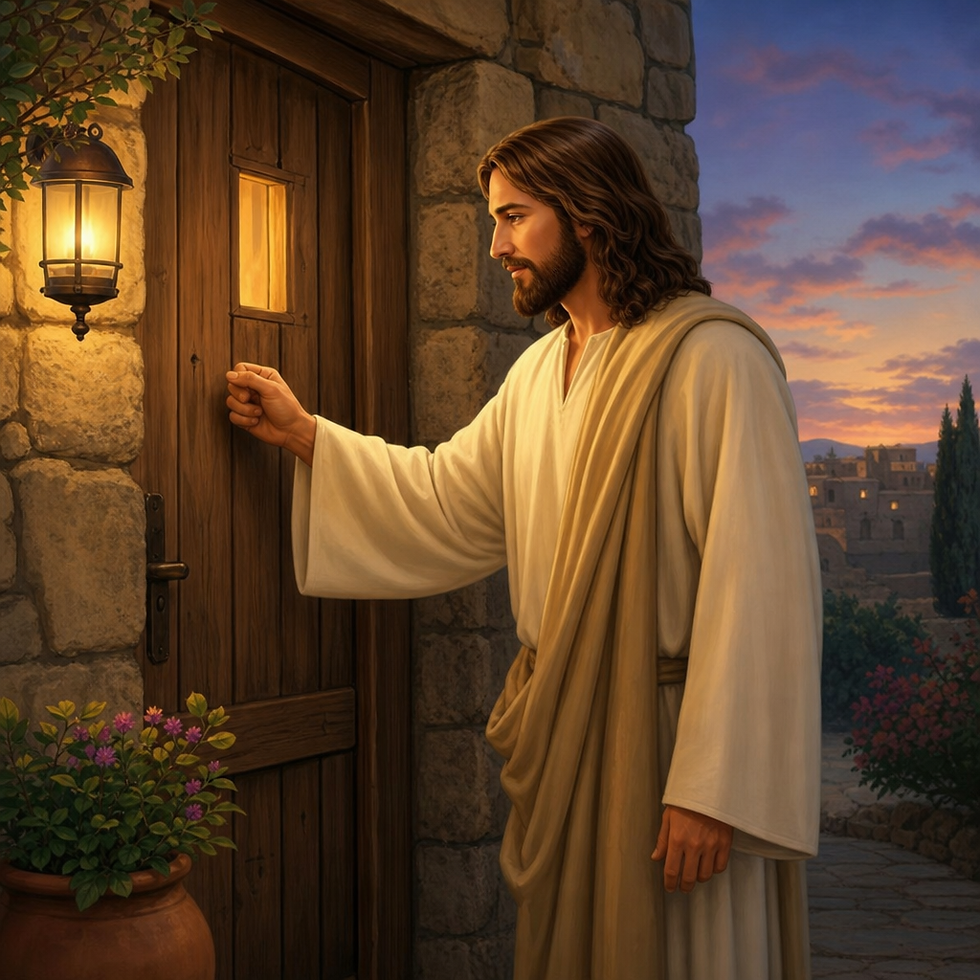
“Jesus answered and said unto him, If a man love me, he will keep my words: and my Father will love him, and We will come unto him, and make Our abode with him.” - John 14:23
Look at this powerful example:
"When He had said this, He breathed on them and said, 'Receive the Holy Spirit.'" - John 20:22
Jesus wasn't breathing a third member of the Trinity into the disciples – He was breathing His own Spirit, which He had received from His Father. He was giving of Himself. This beautifully symbolizes what happens during the Lord's Supper when we accept the indwelling Spirit of Christ by partaking of the wine and the bread.
Who Is the Comforter?
Jesus promised to send His disciples a Comforter after leaving them and ascending to heaven, since He wouldn't be physically present with them anymore. But who exactly is this Comforter?
Jesus Himself gives us the answer:
"And I will pray the Father, and He shall give you another Comforter, that He may abide with you forever: Even the Spirit of Truth; whom the world cannot receive, because it seeth him not, neither knoweth him: but ye know him; for he dwelleth with you, and shall be in you. I will not leave you comfortless: I will come to you." - John 14:17-18
Notice how Jesus concludes this promise: "I will come to you." Did He say "God the Holy Spirit will come to you"? No, Jesus promises, "I will come to you."
Ellen White clearly identified who the Comforter is:
“The Saviour is our Comforter. This I have proved Him to be.” - Ellen White, Manuscript Releases, vol 8 page 49
“Christ is everything to those who receive Him. He is their Comforter” - Ellen White, Manuscript Releases, vol 21, page 372
“There is no Comforter like Christ… the influence of the Holy Spirit is the life of Christ in the soul.” - Ellen White, Review and Herald October 26
“Christ is our guide and Comforter who comforts us in all our tribulations.” - Ellen White, Letter 65,1894
So, the promised Comforter in the Gospel of John, is none other than the Spirit of Jesus which dwells within all of those who keep the commandments of God and who have accepted Jesus as their Lord and Savior.
Is the Holy Spirit a Person?
Since the Holy Spirit is the spiritual essence of God (part of God), it can exhibit all the same attributes of a person that God can – including being grieved, lied to, teaching, comforting, instructing, and more. Just like a human spirit can be lifted, troubled, or sad, so can God's Spirit experience these things.
This doesn't make it a different being any more than your spirit would be a separate being from you. The difference? God's Spirit is omnipresent and can operate independently from Him, allowing it to take on all the attributes of a person.
"Where can I go to escape Your Spirit? Where can I flee from Your presence?" - Psalm 139:7
Thus, God is everywhere present through His representative, the Holy Spirit. Jesus received this divine Spirit from His Father and is also able to be everywhere present due to His Spirit's omnipresent nature.
Ellen White explained it this way:
"The Holy Spirit is Himself (Christ) divested of the personality of humanity and independent thereof. He would represent Himself as present in all places by His Holy Spirit, as the Omnipresent." - Ellen G. White, 10LtMs, Lt 119,1895, par. 18
The Holy Spirit is the omnipresent spiritual attribute of Jesus divested of His physical form. This is how it is possible for Jesus to be in the Holy Sanctuary in heaven while at the same time, through His omnipresent Spirit, He can dwell within us as the Holy Spirit/Comforter here on earth.
Is This a Salvation Issue?
Many Christians, including most Seventh-day Adventists, argue that the identity of the Holy Spirit or belief in the Trinity isn't a salvation issue. But let's examine what Scripture actually says about this.
Jesus said this when praying to His Father:
“Now this is eternal life, that they may know You, the only true God, and Jesus Christ, whom You have sent.” - John 17:3
Here, He clearly identifies His Father as the “Only True God” and that this knowledge, in addition to belief in Jesus as our savior, is essential to salvation or eternal life. It must also be noted here that belief in a trinity or third divine being is not required for salvation.
“Salvation belongs to our God who sits on the throne, and to the Lamb!”- Revelation 7:10
Again, we find that salvation belongs to God the Father and to His only begotten Son, the Lamb of God!
So why is the correct identity of the Holy Spirit important for salvation? Because it's through the life-giving Spirit of Jesus dwelling within us that we're saved:
"And if the Spirit of Him who raised Jesus from the dead is living in you, He who raised Christ Jesus from the dead will also give life to your mortal bodies through His Spirit, who lives in you." - Romans 8:11
It's through Christ's indwelling Spirit that we receive eternal life at His second coming. If we reject Christ's Holy Spirit in favor of an unknown different spirit, then Christ cannot grant us salvation through His redeeming blood. This is what it means to "grieve" the Holy Spirit:
"And grieve not the Holy Spirit of God, whereby ye are sealed unto the day of redemption." - Ephesians 4:30
So, having Christ's Spirit dwell within us is a salvation issue – not believing in a third being called "God the Holy Spirit," which is a man-made title not found in Scripture.
We are granted eternal life when we accept God as the Father and Jesus, His only begotten Son, as our Savior:
"And this is the record, that God hath given to us eternal life, and this life is in his Son. He that hath the Son hath life; and he that hath not the Son of God hath not life." - 1 John 5:11-12
The Bible warns that it is the spirit of antichrist to deny the Father and Son:
"Who is a liar but he who denies that Jesus is the Christ? He is antichrist who denies the Father and the Son." - 1 John 2:22
We must have the indwelling Spirit of Jesus within us to have eternal life. Jesus tells us that there is only one path to salvation:
"I am the way, and the truth, and the life. No one comes to the Father except through me." - John 14:6
There is no other way. Jesus is our only Comforter and Mediator between us and the Father.
We encourage you to study God's Word for yourself with prayer and an open mind, searching the Scriptures daily to see whether these things are true.
May God bless your journey of discovery!


Comments